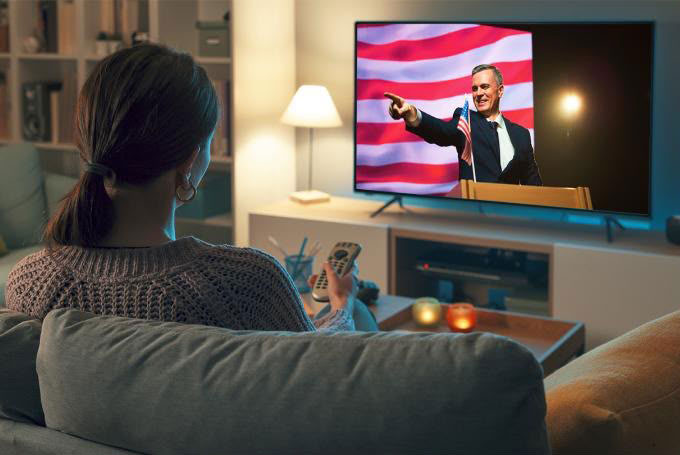
 Every political campaign asks voters to make a decision.
Every commercial brand asks consumers to make a decision.
The product is different, but the psychology is remarkably similar.
So what actually makes a political voice sound trustworthy?
Contrary to popular belief, it isn’t a deep voice, dramatic delivery, or commanding presence. A trustworthy political voice supports the message, reflects the candidate’s personality, and communicates in a way that feels authentic to the audience.
Before someone buys a truck, opens a bank account, hires a financial advisor, or votes for a candidate, they make a quick judgment about credibility. In a split second, they have an emotional reaction and subconsciously ask themselves:
“Do I believe this?”
That moment happens before they evaluate policies, compare prices, or consider evidence.
It’s the moment where trust begins.
Voice plays a critical role in creating that trust.
Many people assume a trustworthy political voice is deep, commanding, or dramatic. In reality, those qualities have very little to do with credibility.
A trustworthy voice is one that supports the message, reflects the candidate’s personality, and feels authentic to the audience hearing it.
The same principles that make a commercial brand sound believable also make a political campaign sound believable. Understanding those principles helps campaigns choose narration that strengthens their message instead of distracting from it—or worse, causing it to be ignored.
Key Takeaways
- Trust begins before persuasion.
- A believable political voice supports the candidate’s story rather than competing with it.
- Authenticity matters more than dramatic delivery.
- The most effective political narration strengthens the campaign’s communication strategy instead of drawing attention to itself.
Trust Comes Before Persuasion
If you’re interested in how trust influences the entire campaign, you may also enjoy Why Some Political Messages Persuade and Others Do Not.
Advertising professionals understand that persuasion rarely begins with facts.
It begins with emotion.
Long before someone evaluates a product, compares prices, or considers a candidate’s policy positions, they’ve already formed an impression based on how the message made them feel.
That reaction usually happens subconsciously.
People don’t think,
“I trust this.”
They simply continue listening.
Or they don’t.
Only after that initial emotional connection do they begin asking more rational questions.
- Is this relevant to me?
- Does this solve a problem I have?
- Can I believe what I’m hearing?
Political communication follows the same pattern.
Campaigns invest enormous effort in refining their message. Pollsters identify voter concerns. Consultants develop positioning. Copywriters shape the narrative. Designers build the visual identity.
Voiceover is part of that communication system.
The narration doesn’t simply deliver the words.
It influences how the audience experiences them.
A believable performance helps listeners lower their guard. It allows the message to feel genuine rather than manufactured.
When the delivery feels forced, theatrical, or disconnected from the candidate, something changes.
The audience stops experiencing the message and starts evaluating the performance.
That shift can happen almost instantly.
The strongest political voiceovers don’t persuade people on their own.
They create the emotional conditions that allow persuasion to happen.
Political Campaigns Are Brands
Some consultants resist comparing campaigns to commercial brands, but the similarities are difficult to ignore.
Both compete for attention.
Both compete for trust.
Both compete against alternatives.
Most importantly, both try to influence behaviour.
Commercial brands work hard to establish a recognizable personality.
Apple projects simplicity.
Patagonia emphasizes authenticity and purpose.
Financial institutions typically communicate stability and confidence.
Those personalities extend beyond logos and colours.
They influence photography, copywriting, music, pacing, and voice.
Political campaigns should approach narration with the same discipline.
A candidate who campaigns as thoughtful and optimistic should not suddenly sound angry in a television commercial.
A candidate promising steady leadership should not be paired with narration that feels overly aggressive.
The voice should reinforce the campaign’s identity.
It should never compete with it.
The Difference Between Authority and Authenticity
Many people confuse authority with volume.
They assume stronger delivery creates stronger persuasion.
Modern audiences often respond differently.
Today’s voters consume podcasts, YouTube creators, streaming television, and social media every day. They hear thousands of real conversations every week.
That changes expectations.
Audiences have become remarkably skilled at identifying communication that feels manufactured.
They may not consciously recognize why something feels inauthentic, but they recognize the feeling almost immediately.
That does not mean political commercials should sound casual.
Professional narration still matters.
Preparation still matters.
Performance still matters.
The goal is not casual conversation.
The goal is believable communication.
There is an important difference.
A narrator can sound polished without sounding artificial.
They can sound confident without sounding theatrical.
They can sound authoritative without sounding intimidating.
Finding that balance is where experience becomes valuable.
What I Have Learned Inside the Booth
I’ve voiced thousands of scripts over the years. Commercials. Corporate narrations. Documentaries. Political campaigns. Even Santa Claus in animated productions.
On paper, they couldn’t be more different.
But every script has asked me to do the same thing.
Earn the listener’s trust long enough for the story to matter.
That’s the storyteller’s job.
Not to sound impressive.
Not to show off a great voice.
To communicate in a way that feels genuine enough for people to believe what they’re hearing.
Political campaigns are simply another form of storytelling.
After recording hundreds of Republican campaign commercials, I’ve noticed that campaign consultants rarely ask me to sound “more political.”
Instead, the direction often sounds something like this:
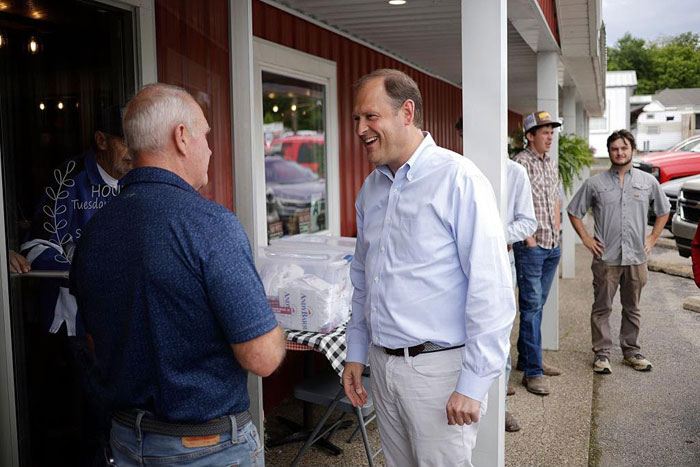
“Imagine you’re sitting across the table from the candidate, sharing your concerns.”
“You’re a fellow voter in this community who shares these concerns.”
“Think of yourself as the frustrated voter who’s ready for change.”
Those aren’t requests for a different voice.
They’re invitations to see the story through a different lens.
When the perspective changes, the delivery changes naturally.
That’s because authenticity isn’t something you perform.
It comes from understanding whose story you’re telling.
Whether it’s a brand, a documentary, or a political campaign, the principle is the same.
People don’t connect with performances.
They connect with stories that feel honest.
Why Restraint Often Creates More Impact Than Intensity
One of the biggest misconceptions in political advertising is that stronger emotion requires a stronger performance.
In many cases, the opposite is true.
Experienced producers understand that persuasion is built through contrast. If every sentence is delivered with maximum intensity, nothing stands out. Every point feels equally important, and the audience stops listening.
The most effective reads know when to slow down.
They know when to let a statistic speak for itself.
They know when a slight pause carries more weight than another layer of emotion.
Commercial advertising has followed this principle for years.
Luxury brands rarely shout because confidence does not need to.
Healthcare companies often speak with reassurance rather than urgency because patients want competence, not excitement.
Financial institutions communicate stability because people are trusting them with their future.
Political campaigns face the same challenge.
Voters are not simply evaluating a message.
They are evaluating whether the campaign appears credible enough to earn their confidence.
Sometimes the strongest delivery is the one that exercises the greatest restraint.
Believable Communication vs. Memorable Performance
Less Effective
- Trying to sound impressive
- Louder delivery
- Performance becomes the focus
- Narrator stands out
- Voice is remembered
More Effective
- Helping the message feel authentic
- More intentional delivery
- Story becomes the focus
- Candidate stands out
- Message is remembered
The Voice Should Support the Strategy
Voiceover is one part of a much larger communication system.
Campaign strategy determines the objective.
Polling identifies voter concerns.
Messaging establishes priorities.
Creative teams develop the visual story.
Voiceover reinforces all of those decisions.
When those elements work together, the campaign feels consistent.
When they compete with each other, trust begins to erode.
Imagine a campaign built around calm, experienced leadership.
The visuals are measured.
The script is thoughtful.
The candidate speaks about solving problems.
If the narrator suddenly sounds angry or overly dramatic, the campaign sends two different messages at the same time.
Most voters will never identify the problem.
They will simply feel that something does not fit.
Successful campaigns reduce those moments of friction.
Every communication should feel like it belongs to the same campaign.
Common Mistakes When Choosing a Political Voice
After working on hundreds of Republican campaigns, I’ve noticed a few patterns that appear repeatedly.
The first mistake is choosing a voice because it sounds impressive rather than because it serves the message.
The strongest political narration rarely draws attention to itself.
Its job is to help voters connect with the candidate, not the narrator.
The second mistake is believing there’s a single “political” style.
There isn’t.
A congressional primary in rural Georgia requires a different communication approach than a suburban mayoral race or a statewide ballot initiative.
Every audience is different.
Every candidate is different.
The story should reflect both.
The third mistake is treating voiceover as a production decision instead of a communication decision.
By the time the script reaches the microphone, every strategic decision has already been made.
The campaign knows who it’s trying to reach, what it wants to say, and why that message matters.
The responsibility of the person behind the microphone is to carry that story to the voter in a way that feels authentic, believable, and human.
When that happens, the voice becomes almost invisible.
What people remember is the message.
A Practical Checklist Before You Approve a Read
Before approving a final voiceover, ask a few simple questions.
Does this sound like a real person?
Voters respond to authentic communication.
If the narration feels performed instead of genuine, credibility begins to erode.
Does the delivery reflect the candidate’s story?
An introductory biography shouldn’t sound like an attack ad.
A fundraising message shouldn’t sound like a policy explainer.
Every campaign has its own voice because every candidate has a different story to tell.
Would this feel authentic if the candidate were saying these words?
The narrator shouldn’t replace the candidate’s personality.
They should help reveal it.
Is the voice helping people hear the message?
The best political voiceovers rarely become the centre of attention.
They help the message become the centre of attention.
What This Means for Your Campaign
Political voiceover is often viewed as the final production step.
I believe it’s better understood as the final stage of communication.
By the time a script reaches the microphone, the campaign has already made countless strategic decisions.
The audience has been identified.
The message has been refined.
The creative has been designed.
The narrator’s responsibility is to bring all of those decisions to life in a way that feels authentic and believable.
When the voice, script, visuals, and campaign strategy all point in the same direction, voters experience the message as one complete story.
That’s when communication becomes more persuasive.
Not because the performance was bigger.
Because every element of the campaign worked together.
After recording hundreds of Republican campaigns, one idea continues to stand out.
Campaign consultants rarely ask for a bigger performance.
They ask for a more believable story.
I don’t think that’s a coincidence.
It reflects the direction political communication has been moving for years.
Voters are surrounded by polished marketing every day.
The campaigns that stand out aren’t always the loudest.
They’re the ones that feel the most human.
Looking Ahead
Voiceover will never win an election on its own.
Strong candidates, clear messaging, smart strategy, and disciplined execution will always matter more.
But when the campaign reaches the microphone, the story is placed in someone else’s hands.
The responsibility of the narrator is simple:
Carry that story to the voter in a way that feels authentic, believable, and human.
When that happens, people stop noticing the voice.
They start connecting with the message.
Looking for a voice that supports your campaign strategy?
If you’re producing Republican campaign advertising and need authentic, credible voiceover with fast turnaround, live-directed sessions, and Source-Connect capability, I’d be happy to help.
Let’s talk about how the right voice can strengthen your next campaign.


